Blog und Projektaktivitäten
„Making in West Africa“ ist ein Globales Marie Skłodowska-Curie Fellowship (MSCA). Das bedeutet, dass es in eine ‚Outgoing‘ und eine ‚Return‘ Phase unterteilt ist. Während der Outgoing-Phase (1.9.2022-29.2.2024) lebt die Forscherin in Nigeria, und arbeitet eng mit der Partnerorganisation, dem History Department der University of Ibadan zusammen. Für diesen Zeitraum sind auch Forschungsaufenthalte in Ghana geplant. Weiters umfasst diese Projektphase auch ein 3-monatiges Secondment (1.12.2023-29.2.2024) am African Studies Centre Leiden (Niederlande). In der Return-Phase (1.3.2024-28.2.2025) lebt und arbeitet die Forscherin in Europa. Sie ist Teil des Arbeitsbereiches Globale Zeitgeschichte in Graz, und kooperiert eng mit der Abteilung III des Max Planck Instituts für Wissenschaftsgeschichte in Berlin.
Das Projekt umfasst verschiedenste Aktivitäten sowohl während der Outgoing, als auch der Return Phase.
Blog
Below short contributions which have also been published on Instagram, under @_makingthings_.
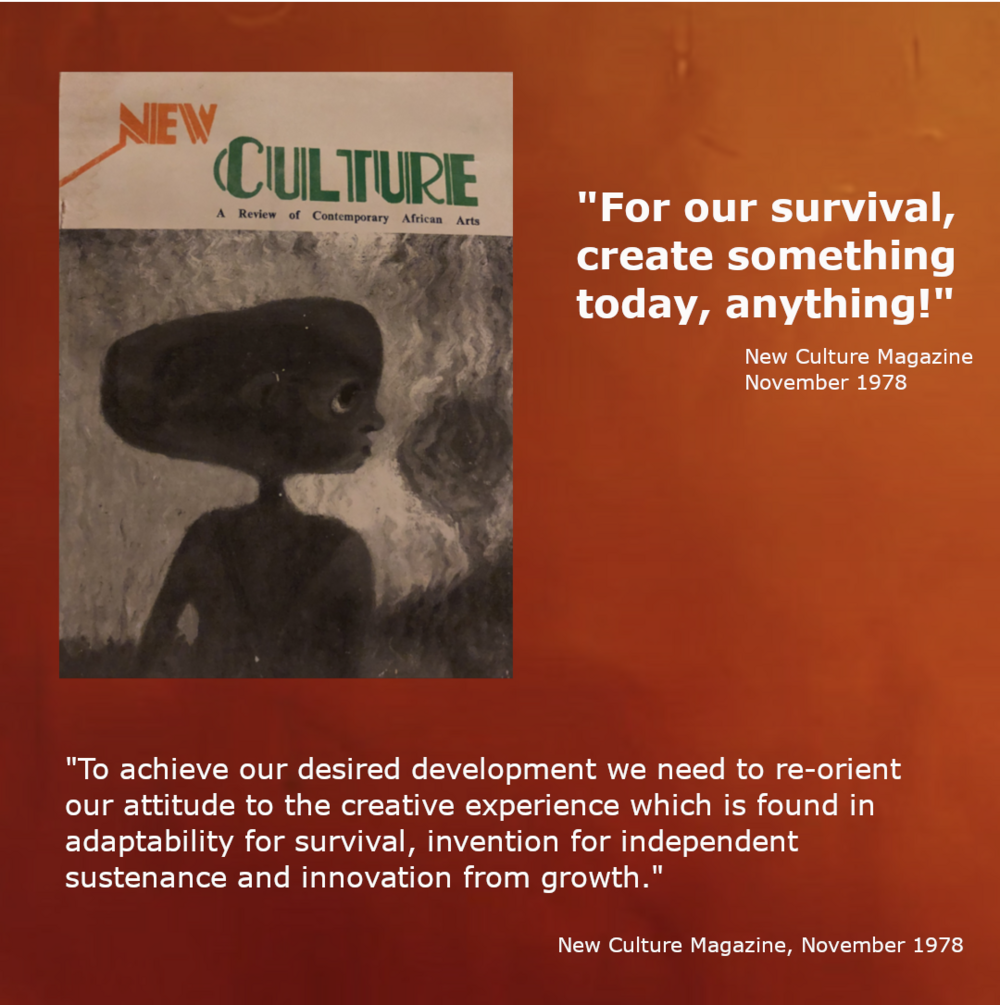
"Create something today, anything"
An article published in the New Culture Magazine in November 1978 emphasizes the importance of “making things”. By urging people to “create something today, anything”, it highlights that through innovation and creativity, (economic) dependence could be reduced, and self-reliance achieved.
Other thinkers and activists, such as Franz Fanon (The Wretched of the Earth), have equally emphasized the importance of inventiveness, of ‘making’ something that is new, to not imitate what is found elsewhere. Ultimately, they call for a new society, for remaking society, not to copy existing blueprints. We might argue they too call for people to become “craftspeople”, to create and invent something new, to challenge and re-make existing world orders on multiple levels.
These quotes from “New Culture” magazine can thus point to the ways in which we might expand our understanding of what it means to be a craftsperson.
---
The New Culture Magazine was published in the 1970s by New Culture Studio, which was founded by Demas Nwoko in Ibadan, and is still active today (see @newculturestu on Instagram). New Culture Magazine featured articles on various themes – on architecture, plastic arts, performing arts – it had a children’s section and reached out to the diaspora. All with the aim to create awareness and understanding of the Arts.
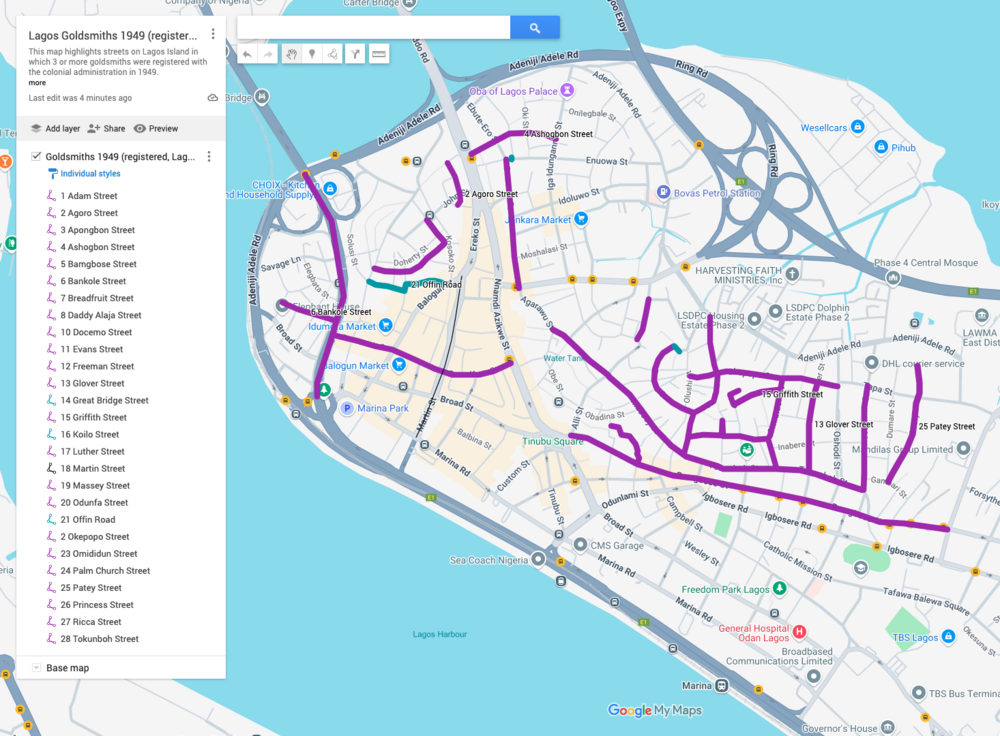
Map of Lagos goldsmiths (registered), 1949
This map highlights streets on Lagos Island in which 3 or more goldsmiths were registered with the colonial administration in 1949. In total about 500 goldsmiths were registered, and ca. 300-330 of them were working on Lagos Island. These numbers are quite impressive, as the whole of Lagos had about 230,000 to 267,000 inhabitants at that time.
The high concentration of goldsmiths on the Island, and in particular in the so called Brazilian Quarter might say something about who were the goldsmiths’ main customers: back then, members of the elite and the aspiring middle classes lived in Lagos Island. But the high concentration might also speak to the history of the profession, which is associated with Afro-Brazilian craftspeople.
Link to the Map on Google Maps: https://www.google.com/maps/d/edit?mid=1GUisrpqZP34FxZyUO0KVnl1PngSOgQY&usp=sharing
Sources:
National Archives Ibadan, Comcol I: 1749 The Goldsmiths Ordinance
Josephine Baker (1975): Urbanization and Political Change. The Politics of Lagos, p. 33
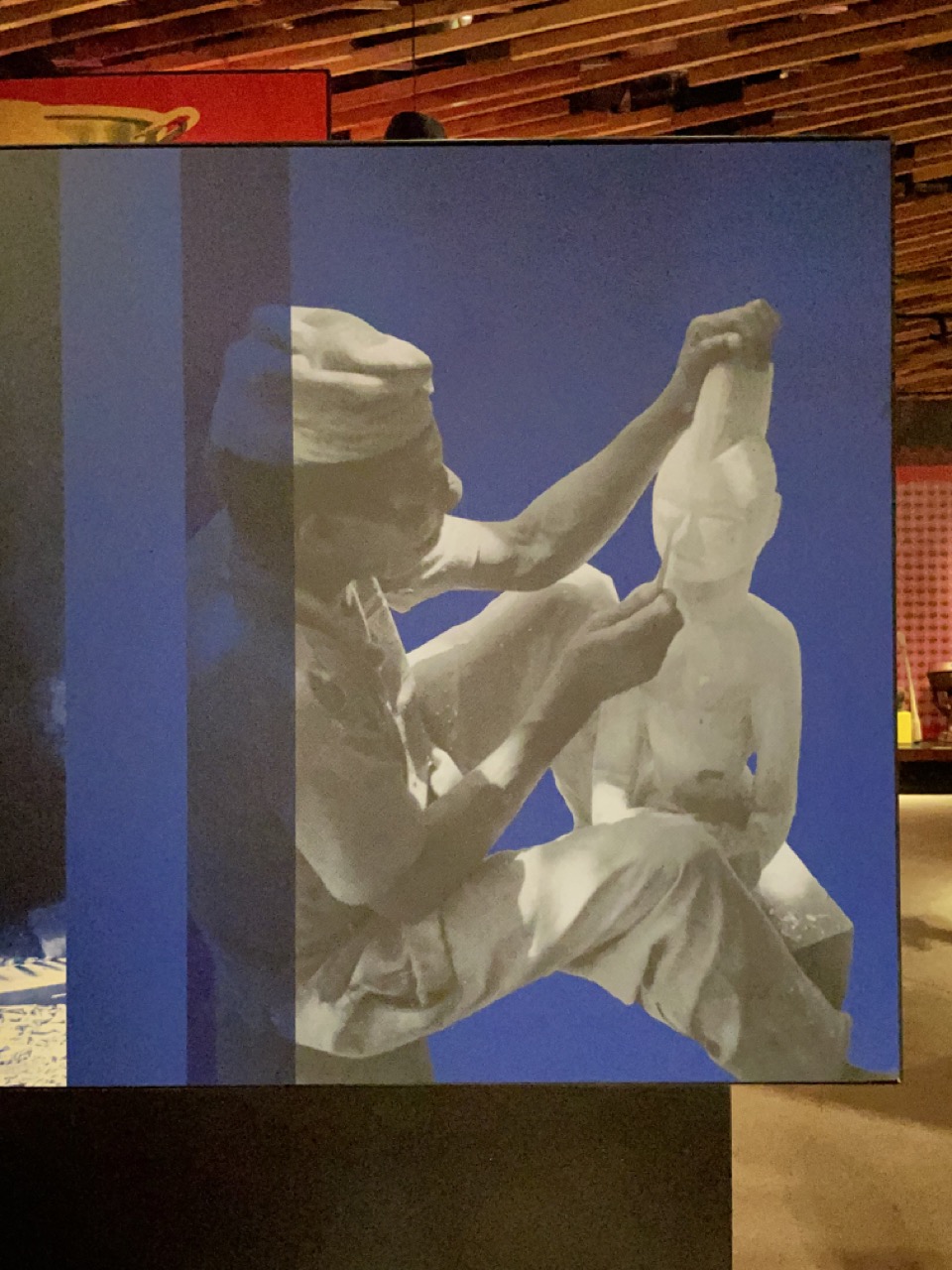
Iṣẹ́ ọwọ́ – Handicrafts
This image was taken at the J. Randle Centre for Yorùbá Culture and History in Lagos. The museum seeks to capture “the essence of Yorùbá heritage“, how it shapes contemporary global narratives. And part of this narrative are craft practices. In the museum, these are firmly connected with the history of Yorùbá urbanization: how regions could become famous for certain crafts, how individual crafters could be celebrated, but also how some of the most skilled craftspeople lived and worked in towns.
The museum emphasizes the craft of woodcarving but also pottery. Do we still associate these crafts with towns? Which (other) crafts or iṣẹ́ ọwọ́ would we associate with Lagos today? Fashion designer? Vulcanizer?
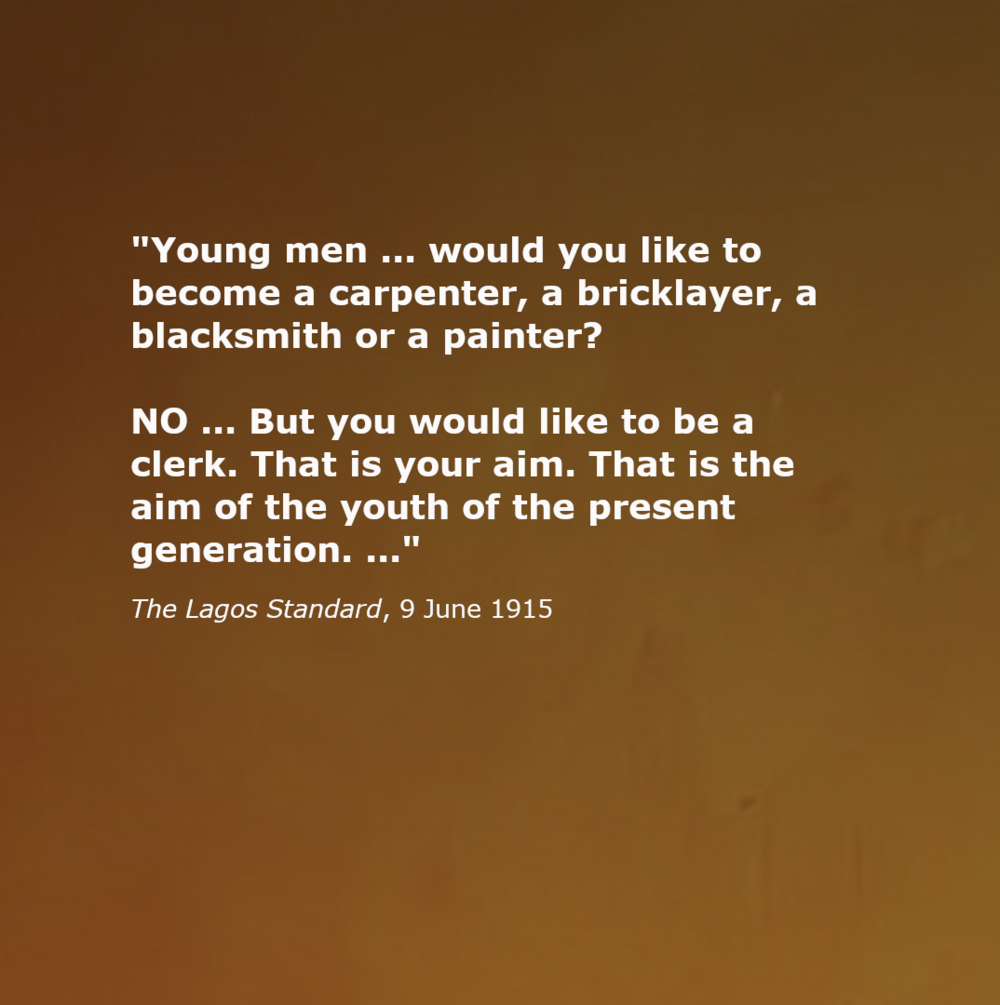
The Youth and Crafts in 1915
What you see in the image is how Adeoye Deniga started an article in defense of the youth in the early 20th century. Are such sentiments still true today? Are young people today only seeking to make money quickly? Do they only want to be “driving Okada”? In 1915, Deniga was fighting back against a notion that young people were “merely” interested in clerkdom and petty trading. Deniga argued that in the late 19th century, people could make a good living off craft professions, but that nowadays, they were poorly paid, and that customers were increasingly in the habit of duping craftspeople.
Adeoye Deniga himself started his career as a messenger, and was a teacher and headmaster before he started publishing texts and printed matter and eventually made a name for himself as “Professor” Deniga. He worked for the Lagos Weekly Record – an anticolonial newspaper – and was a member of the National Congress of British West Africa before he launched the bilingual (English and Yoruba) newspaper Eko Akete in 1922.
Sources: The Lagos Standard, 9 and 16 June 1915.